

- Reformer Pilates is full-body training with a clear focus on the deep core muscles, legs and glutes. The back, shoulders and arms are engaged through the pulley system.
- At the center is the Powerhouse: the transverse abdominis, pelvic floor, diaphragm and deep spinal erectors. These muscles contribute to almost every exercise.
- More spring tension does not automatically mean harder. In some exercises, the springs provide support and make the movement easier.
- Compared with mat Pilates, you train the same muscle groups, but with resistance, a greater range of motion and significantly more feedback on your technique.
- To be honest: The Reformer replaces neither endurance training nor heavy strength training. It is a control and muscular-endurance machine.
Reformer Pilates looks gentle at first glance. You lie down, push a carriage away and pull it back. After their first session, most people are surprised by two things: that their abs hurt the next day, and that they feel a pull in places they did not know had muscles. This article explains which muscle groups really work on the Reformer, what the springs have to do with it and why the machine is currently making its way from studios into living rooms.
Which muscles does Reformer Pilates train?
Reformer Pilates trains the entire body, with the greatest emphasis on the deep core muscles, thighs and glutes. Unlike a strength-training machine, no exercise isolates just one muscle. As soon as the carriage starts moving, you have to control it, and that is where the core comes in, whether you are pushing away with your legs or pulling with your arms.
The following overview assigns the key regions to typical exercises.
| Region | Key muscles | Typical exercise on the Reformer | What you feel afterwards |
|---|---|---|---|
| Deep core | Transverse abdominis, obliques, pelvic floor, multifidus | Hundred, Coordination, Short Spine | A deep burn in the abdomen, not on the surface |
| Legs | Quadriceps, hamstrings, calves | Footwork in all foot positions | Sore thigh muscles, often after the very first session |
| Glutes and hips | Gluteus maximus and medius, adductors, abductors | Leg Circles in the straps, Side Splits | Lateral pulling in the hips and inner thighs |
| Back | Latissimus dorsi, rhomboids, spinal erectors | Pulling Straps, seated Rowing | More open posture, less tension in the neck |
| Shoulders and arms | Rear deltoids, triceps, biceps, serratus | Arm Circles, Long Stretch, Plank on the carriage | Shaking in the arms during slow execution |
What stands out is where the Reformer is stronger than most home fitness equipment: in the small stabilising muscles around the hips, shoulder blades and spine. These muscles are difficult to target with dumbbells because they only engage when a movement becomes unstable. That is exactly what a rolling carriage creates throughout the workout.
What is the powerhouse, and why is it at the centre of Pilates?
The powerhouse is the Pilates term for the deep core muscles between the rib cage and pelvis: the transverse abdominis, pelvic floor, diaphragm and deep spinal extensors along the spine. Joseph Pilates built his entire system around it, and on the Reformer, you can feel it in a measurable, tangible way.
The reason is mechanical. The carriage runs on rollers, the springs pull it back, and you lie on top of it. If your core gives way, your pelvis tilts, your lower back lifts off, and the movement becomes uncontrolled. You notice it immediately, not just the next day. That is why, for many people, the Reformer is the apparatus on which they first understand what core engagement really means.
For everyday life, this is exactly the muscle group that matters. It keeps you upright while sitting, catches you when you stumble, and helps determine whether your lower back aches after eight hours at your desk.
Do more springs make the workout harder?
No, not automatically. This is the most commonly misunderstood aspect of the entire apparatus. The colour-coded springs control how strongly the carriage is pulled back, and depending on the exercise, this acts as either resistance or assistance.
Two examples make the difference clear:
- Supine footwork: You push against the springs. More spring tension means more resistance for the legs, making the exercise harder.
- Long Stretch or Plank on the carriage: The springs keep the carriage in place. More tension means less sliding, making the exercise easier. Removing springs here makes the exercise considerably more challenging.
This leads to a practical rule for home use: the goal is not “as many springs as possible”, but the number of springs that still allows you to perform the movement slowly and with proper form. If you later want to fine-tune the resistance, add individual replacement and extension springs for the Reformer instead of compromising on technique.
Does the Reformer train different muscles than mat Pilates?
The muscle groups are largely the same; the load is different. On the mat, you work against your body weight and gravity. On the Reformer, spring resistance is added, and it can be adjusted in both directions: upward for more strength and downward for more support.
Three differences make the greatest practical impact:
- Greater range of motion. The legs and arms move farther via the straps and pulley system than is possible on the mat. This works the hip muscles at angles that simply do not occur on the floor.
- More feedback. A carriage that runs unevenly or jerks immediately reveals any asymmetry. On the mat, a weaker side often goes unnoticed for years.
- Support for beginners. Anyone with limited core strength can get into proper positions more quickly on a reformer because the springs provide support. On the mat, the same starting point is too demanding for many people.
Anyone weighing up whether moving from the mat to the equipment is worthwhile can find a direct comparison in our article Pilates Reformer at Home: Is It Worth It Compared with Mat Pilates?.
Why is Reformer Pilates so popular in 2026?
That is because two developments are coming together: training is becoming less focused on maximum exertion and more on mobility, stability and joint health, while the equipment has finally become suitable for homes. A reformer that can be folded up and is made of wood rather than studio steel no longer has to disappear into the basement.
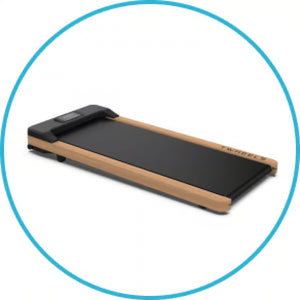
We can see just how strong this pull is in our own figures. Over the past 90 days, the Pilates Reformer has been the second-highest-revenue piece of equipment in our shop, directly behind the Walking Pad, despite accounting for around one-seventh of orders. A device that, just a few years ago, was found almost exclusively in studios is holding its own against our best-selling bestseller.
Honesty also means acknowledging the downside. A trend also leads to purchases that end up standing unused against the wall after eight weeks. Reformer Pilates thrives on repetition and technique, not on an impressive first workout. Anyone who has never used a reformer should plan a few studio sessions or at least a structured video programme before bringing a device home.
Who is a reformer at home worthwhile for, and who is it not?
A reformer is worth it if you train regularly, value controlled movement, and would otherwise go to a studio several times a month. It is not worth it if your primary goal is to build endurance or muscle mass.
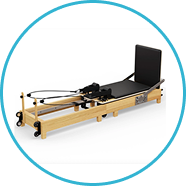
So that the decision does not come down to gut feeling, here are the hard facts about our own device, the Maple Wood Pilates Reformer:
- Weight capacity: designed for up to 150 kg body weight and a height of 210 cm. This is more than enough for the vast majority of households.
- Weight: approximately 75 kg. This isn’t a piece of furniture you can carry through the stairwell alone. If it’s being delivered to a third-floor apartment, plan for two people.
- Delivery: The box measures 240 x 66 x 28 cm. Measure the stairwell and doorways beforehand; this is where things are most likely to get tight in Swiss older buildings.
- Space when stored: The folding mechanism lets you store the machine against the wall between sessions. You still train with it unfolded, so you need a clear area.
- Price range: A good mat costs less than 50 francs, while a Reformer is in the four-figure range. It makes more sense to compare it with studio memberships than with a mat.
- What's included: The Reformer Box and Jump Board are included. The Jump Board is the only way to really get your heart rate up on the Reformer while lying down and without impact on the joints.
What our customers most often tell us is not about the variety of exercises, but about consistency. One 61-year-old customer writes in his review that, after a knee replacement, he trains for around 25 minutes in the morning, mainly doing footwork and stretching with the straps, and that climbing stairs has since become noticeably easier for him. That is exactly where the benefit lies: short, controlled sessions that you can actually stick with.
If you’re still undecided about the frame material, you’ll find the comparison in Wood or aluminium Pilates Reformer. And if you’re just starting out and first want to clarify whether a mat, set or machine is the right entry point, it’s better to read our complete Pilates Reformer buying guide first.
Frequently asked questions
Which muscles does Reformer Pilates train most effectively?
The deep core muscles and the thighs. The core works during practically every exercise because it has to control the moving carriage. The legs are engaged through the footwork series, which comes at the beginning of most sessions.
Is Reformer Pilates a full-body workout?
Yes. Over a full hour, it works the legs, glutes, core, back, shoulders and arms. Individual exercises may focus on specific areas, but the stabilising muscles remain engaged throughout.
Does Reformer Pilates build muscle?
It builds muscular endurance and muscle definition, not mass. The spring resistance is below what targeted hypertrophy training requires. If you want to build visible muscle mass, it’s better to combine Pilates with strength training rather than replace it.
How often should you train on a Reformer?
Two to three sessions per week lasting 25 to 45 minutes are a realistic schedule that works well for many people. Consistency matters more than duration, because technique and core control develop through repetition.
Is Reformer Pilates good for back pain?
Controlled movement and core stability are common approaches for non-specific back pain, and many people therefore find Pilates helpful. However, if you have existing symptoms, have recently undergone surgery, or are pregnant, you should consult a doctor or physiotherapist beforehand.
Do you need prior knowledge to use a Reformer at home?
Not essential, but advisable. The movements are easy to learn but easy to perform incorrectly, especially when it comes to pelvic position and the neck. A few guided sessions or a structured beginner programme can save you months of ingrained mistakes.
Is a Reformer loud enough to disturb neighbours?
Not during normal use. The carriage runs on rollers along a rail, there is no impact and no motor. The loudest noise is the springs being hooked in. For an apartment, it is considerably less problematic than a treadmill.
Our conclusion
Reformer Pilates is not a gentle stretching routine, but a full-body workout that focuses on areas where most training plans have a gap: the deep core muscles and the small stabilisers around the hips, shoulders, and spine. Your legs and glutes are engaged through Footwork, while your back and arms work via the pulley system. What it is not: a cardio machine or a substitute for heavy strength training. If you understand that and are prepared to invest in technique during the first few weeks, you get a workout you can do just as well at 40 as at 70.
If you’re looking for equipment that doesn’t have to disappear into the basement after your workout, take a look at the foldable maple wood Pilates Reformer from TWHEELS: solid maple wood frame, folding mechanism, adjustable footbar and headrest, Reformer Box and Jump Board included, designed for up to 150 kg and 210 cm.
From knowledge to training: You can find the exercises related to this article in our exercise hub. There, you’ll find 10 tested Pilates Reformer exercises with instructions, filterable by muscle group, level, and goal.
Written by Lena Brunner, TWHEELS Editorial. All equipment specifications are taken from the current TWHEELS product data set.