





- A height-adjustable desk is worthwhile if you actually use it to alternate. The benefit comes from changing position, not from standing continuously.
- A good starting rhythm: sit for around 50 minutes, stand for 10 to 15 minutes, then switch. Standing for eight hours straight isn't a good idea.
- Electric beats a hand crank as soon as you adjust the desk several times a day. Saved heights are the difference between using it every day and setting it once and forgetting it.
- Not a weight-loss tool: standing burns only a few more calories per hour. For a real effect, combine the desk with movement.
- When buying, look for: a stable lift range up to your preferred height, load capacity, a quiet motor, a large desktop, and memory buttons.
Contents
- Is a height-adjustable desk really worthwhile?
- What are the benefits of alternating between sitting and standing?
- Standing or sitting: the right rhythm
- Who does not need a standing desk?
- What should you look for when buying?
- How do I set the correct height?
- Frequently asked questions
In short: A height-adjustable desk is worthwhile if you alternate between sitting and standing instead of staying in one position for hours. The benefit lies in the change: less sustained pressure on your back and neck, and a more alert mind in the afternoon. As a dedicated standing workstation or an expensive status symbol, however, it offers little.
Sitting all day and ending up with a stiff neck in the evening: almost everyone who works from home knows the feeling. A height-adjustable desk promises relief. But is the investment really worthwhile, or is it just a stylish gadget? Here's the honest answer, based on what ergonomic research says and what we've noticed ourselves.
Is a height-adjustable desk really worthwhile?
Yes, but only if you use it to alternate between sitting and standing. The health benefit doesn't come from suddenly standing all day, but from regularly changing your posture. A fixed desk can't do that; a height-adjustable desk can.
The World Health Organization (WHO) and Swiss workplace authorities such as SECO have been recommending the same thing for years: interrupt prolonged, uninterrupted sitting. A desk that can be raised to standing height in seconds makes exactly this interruption easy. And things that are easy are things you actually do in everyday life. A desk that requires two minutes of cranking first will stay down.
To be honest, though: the desk alone won't make you healthy. It's a tool that makes a good habit easier. Whether you use it is up to you.
What are the benefits of alternating between sitting and standing?
The change relieves the spine, keeps the circulation going, and helps prevent the typical afternoon slump. Sitting in the same position for hours puts one-sided strain on the intervertebral discs and neck muscles. Standing up redistributes this load and activates the leg and core muscles, which practically switch off when sitting.
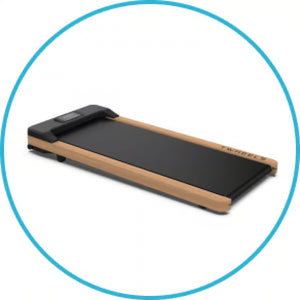
What a standing desk is not: a weight-loss device. Standing burns only a handful more calories per hour than sitting. Over several weeks, that adds up to very little; it does not replace a walk or a workout. If real movement matters to you, it is worth supplementing the desk with a treadmill and combining it into a walking desk consisting of a standing desk and Walking Pad. That way, you walk while working instead of merely standing.
The key point in one sentence: Sitting is not the problem; permanent sitting is. We explain why in more detail in our guide Bringing movement into your home office.
Standing or sitting: the right rhythm
The right answer is not standing instead of sitting, but alternating between the two. If you go from sitting all day to suddenly standing for eight hours, your legs will quickly become tired and your lower back may start to hurt. This usually leads to leaving the desk in its lowest position again.
A proven way to get started looks like this:
| Phase | Duration | Position | Why |
|---|---|---|---|
| Focused work | Approx. 50 min. | Sitting | Focused typing, reading, detailed work |
| Active phase | 10 to 15 min. | Standing | Calls, emails, thinking, taking a breath |
| Microbreak | 1 to 2 min. | Walking | Get water, open the window, loosen up briefly |
After one to two weeks, you can increase the amount of time you spend standing. As a rough guideline, many ergonomists recommend spending about half your time sitting, a good quarter standing, and the rest moving. More important than the exact figure is that you switch positions at all. A tip from everyday experience: link the change to a trigger, such as taking every new call while standing. That way, you do not have to remember.
Who does not need a standing desk?
A height-adjustable desk is hardly worth it if you never adjust it. That may sound obvious, but it is the most common reason the money goes to waste. If you raise the desk to sitting height once and never touch it again, you have bought an expensive fixed desk.
It is also of little use in the following cases:
- You sit at your desk for only one or two hours a day. In that case, the health benefits are limited.
- Your space is very tight, and a large desktop simply will not fit.
- You expect the desk to cure back pain. It can reduce one-sided strain, but it does not replace an ergonomic chair or medical evaluation for existing complaints.
The last point in particular is important: alternating between sitting and standing works best together with a good sitting position. An ergonomic office chair and the desk are a team, not an either-or choice. Incidentally, the question we hear most often on this topic is not whether the desk is stable enough, but whether you will actually use standing in everyday life. The honest answer from our own Zurich office: only with saved height presets. If you have to find the position manually every time, you'll stay seated.
What should you look for when buying?
The most important buying criteria are adjustment type, height range, load capacity, motor noise and desktop size. When comparing the three standard options, it quickly becomes clear why an electric desk is the right choice for most home-office users:
| Option | Adjustment | Suitable for everyday use | Who it's for |
|---|---|---|---|
| Fixed desk | not at all | no switching possible | For anyone who never wants to stand |
| Manual (hand crank) | slow and cumbersome | usually stays at the lowest setting | Limited budget, infrequent adjustments |
| Electric with memory presets ★ Our recommendation | at the push of a button, in seconds | used every day | Home office, daily sit-stand use |
Specifically, you should pay attention to these points:
- Height range: It must cover both your sitting and standing height. Our electric height-adjustable standing desk moves continuously from 75 to 120 cm, covering sitting and standing heights for people of common heights; compensate for very low sitting heights with a higher chair and a footrest.
- Load capacity: Monitor, laptop, dock and accessories quickly add up. A capacity of up to 120 kg is a solid guideline for a normal setup.
- Quiet motor: If the desk makes a loud noise while adjusting during a call, you'll probably leave it alone. A quiet motor lowers precisely this barrier.
- Memory presets: Four saved heights mean: press one button and you're done. This is the factor that determines whether you'll use it every day.
- Desktop size: 140 x 80 cm provides room for two monitors and space for notes without feeling cramped.
How do I set the correct height?
As a rule of thumb, your forearms should rest horizontally on the desk when sitting and standing, while your shoulders remain relaxed. The following table gives you starting values based on your height, which you can then fine-tune:
| Height | Sitting height (approx.) | Standing height (approx.) |
|---|---|---|
| 160 cm | 65 cm | 95 cm |
| 170 cm | 68 cm | 100 cm |
| 180 cm | 72 cm | 106 cm |
| 190 cm | 76 cm | 112 cm |
A quick check for fine-tuning: elbows at a 90-degree angle, the top line of the screen just below eye level, and wrists straight. That’s exactly what the memory presets are for. Ours have two presets permanently assigned: one at 76 cm for sitting and one at 108 cm for standing. This makes changing position a single press, and the desk doesn’t stay lowered just because it’s more convenient.
Frequently asked questions
Is standing at a desk healthier than sitting?
It’s not standing itself but alternating positions that is healthier. Standing for long periods puts similar one-sided strain on the legs and lower back as sitting for long periods. The benefit comes from changing position regularly throughout the day.
How long should you stand at a standing desk?
For starters, 10 to 15 minutes per hour is enough. After one or two weeks, you can increase this. A frequently cited guideline is to spend about half of your working time sitting, a quarter standing, and the rest moving.
Can a height-adjustable desk help you lose weight?
Hardly. Standing burns only a few more calories per hour than sitting. For a noticeable effect, you need movement—for example, a walking desk with a treadmill.
Manual or electric height adjustment—which is better?
Electric as soon as you adjust it several times a day. A hand crank is cheaper, but so cumbersome that most people eventually stop raising the desk. Memory presets are only available with electric models.
What height should a standing desk be?
That depends on your height. As a rough guide: around 95 cm standing height for someone who is 160 cm tall, and around 112 cm for someone who is 190 cm tall. An adjustment range of around 75 to 120 cm covers the sitting and standing heights of most people.
Is the investment worth it?
If you spend several hours at your desk every day and actually use the desk to alternate between sitting and standing, yes. If it stays at one height all the time, you’re better off saving your money.
In plain English: is it worth it?
A height-adjustable desk is one of the few home-office purchases that can make a noticeable difference, provided you use it correctly. Not as a standing workstation, but as a desk that makes alternating positions easy. Electric, with saved heights and a quiet motor, so the barrier to standing up stays low. If you put this into practice, you’ll feel more relaxed in the evening and stay more focused through the afternoon.
Our electric height-adjustable standing desk covers exactly what matters, with a range of 75 to 120 cm, four memory presets, a quiet motor, and a 140 x 80 cm desktop. If you want to set up your home office ergonomically from top to bottom, you’ll find the right chair and more accessories in our office equipment.