

-
eMobility
-
Fitness
-
Outdoor
-
Office



TWHEELS Exercise Library
WalkingPad Training: Programs for the Office and Home
The WalkingPad brings movement into your everyday life: while working at a standing desk, making phone calls, or taking a relaxed session in between. Here you’ll find six programs, from getting started to interval walking, along with clear pace recommendations for every situation.
Important when getting started: With the handrail folded down, you can walk at up to 6 km/h. To jog, fold the handrail up; speeds of up to 10 km/h are then possible.
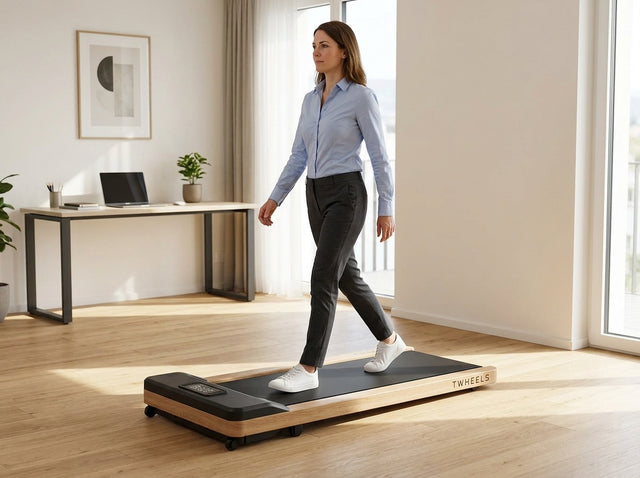
Gentle start for walking beginners
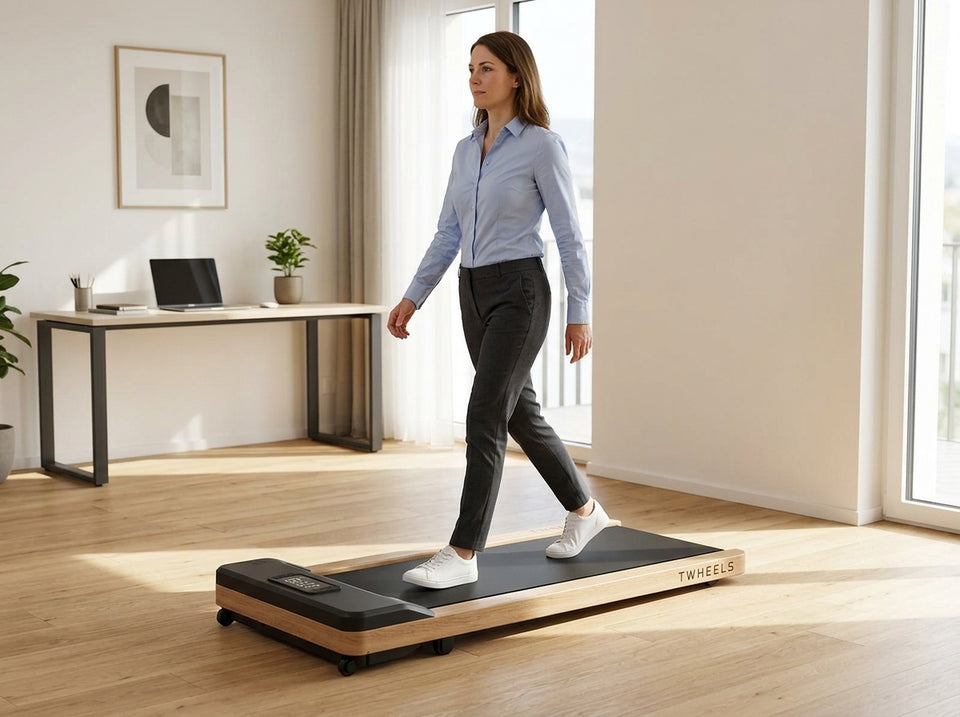
Gentle start for walking beginners
- Stand in the middle of the pad and start the belt at 1.5-2 km/h; stand tall, eyes forward, shoulders relaxed.
- Walk 3-5 min at 2-3 km/h to get used to the belt; let your arms swing loosely.
- Once your stride feels safe, go up in 0.1 km/h steps to 3-4 km/h and hold for 5-10 min.
- Ease back down to 2 km/h for the last 2 min; only step off once the belt has stopped.
- Progression: build the duration first (around 10 percent more per week at most), speed comes later.
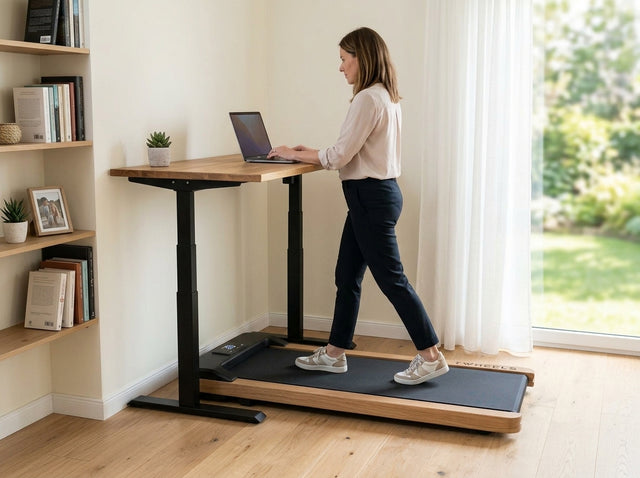
Walking desk workday
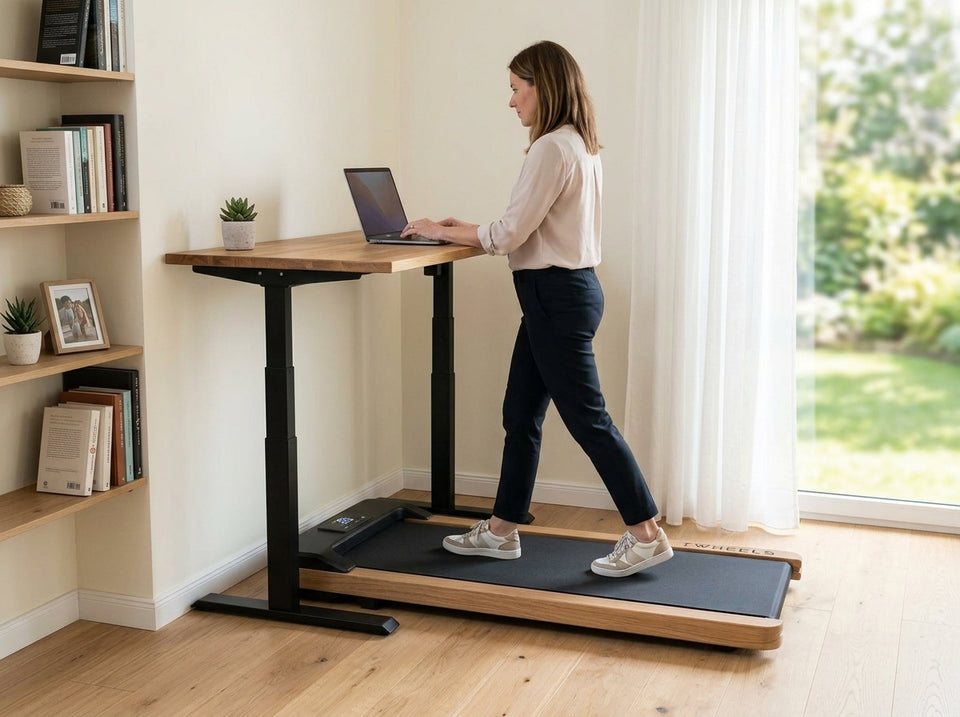
Walking desk workday
- Slide the pad under your standing desk with the handrail folded down (that's why 6 km/h is the limit); set the desk height so your forearms stay level while typing.
- Focused work (typing, email): 2-3 km/h; stay upright and look at the screen instead of your feet.
- Calls, reading, brainstorming: 3-4 km/h; shoulders relaxed, don't lean on the desk.
- Rhythm: walk 30-45 min, then sit or stand for 15-30 min, alternating through the day.
- Bare minimum on all-sitting days: 5 min on the pad every 30 min; in a Columbia study this pattern cut post-meal blood sugar spikes by 58 percent compared with sitting straight through.
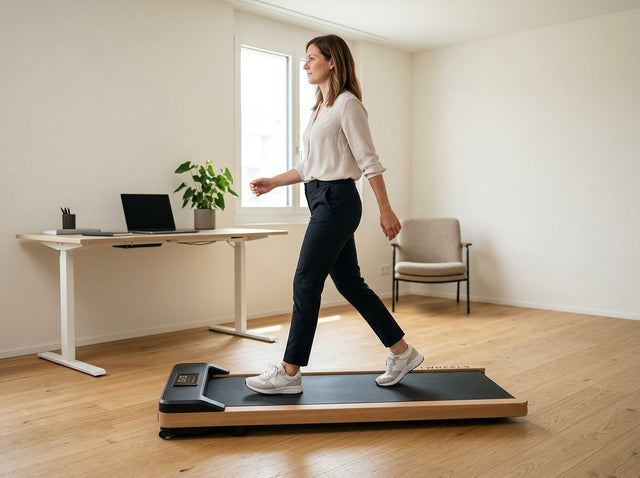
Brisk everyday walk
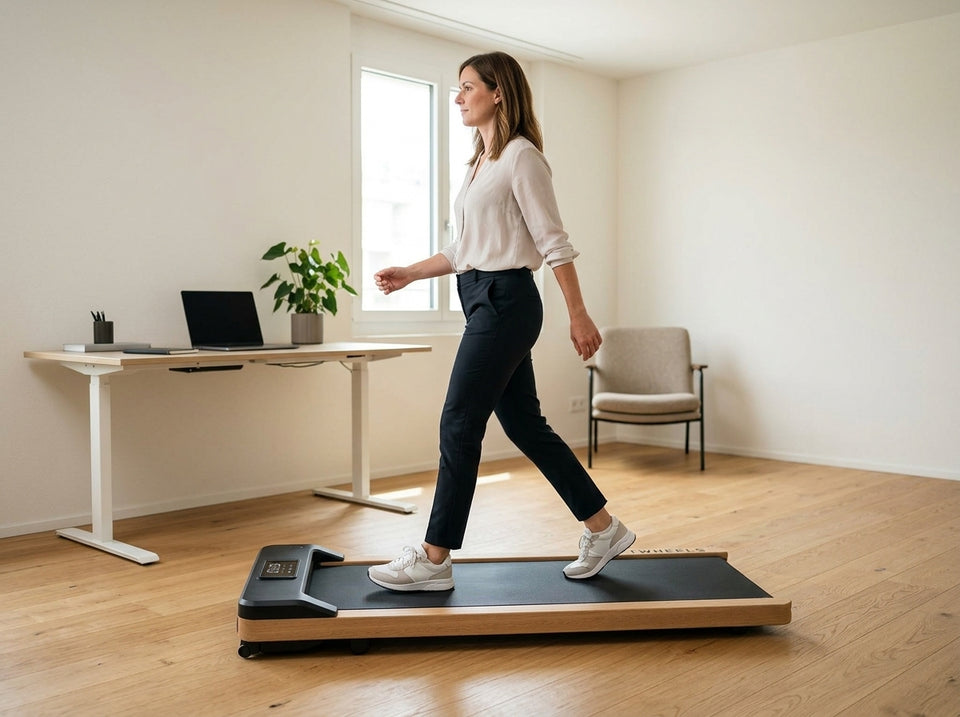
Brisk everyday walk
- Warm up for 3-5 min at 3-4 km/h; set your posture: tall, eyes forward, shoulders down.
- Build up to 5-5.5 km/h; keep your arms bent and swinging actively, roll through each step.
- Hold 15-20 min in the 5-6 km/h range. Rule of thumb for brisk: you can still talk, but not sing.
- For the last 3 min, ease down in 0.1 km/h steps to around 3 km/h.
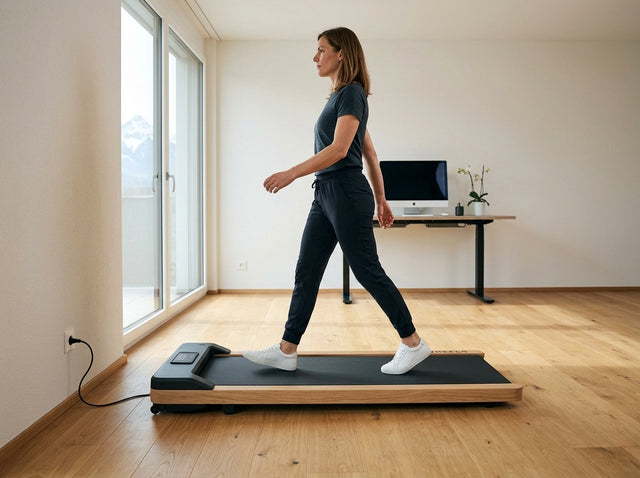
Interval walk (3/3 method)
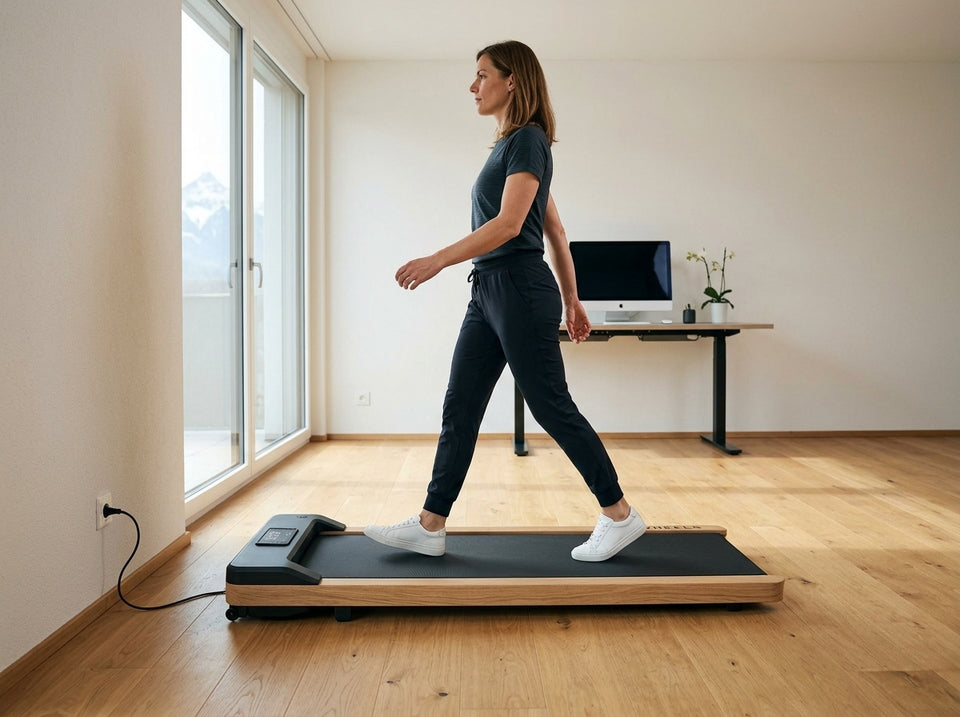
Interval walk (3/3 method)
- Warm up for 5 min at 3-4 km/h; tall posture, eyes forward, arms loose.
- 3 min brisk at 5.5-6 km/h: fast enough that you can only talk in short sentences; use your arms actively.
- 3 min easy recovery at 3-4 km/h; the slow phase is part of the method.
- Run through the switch 5 times, changing speed in 0.1 km/h steps.
- Background: in studies, the Japanese interval walking method improved endurance capacity by 14 percent on average, clearly more than steady-pace walking.
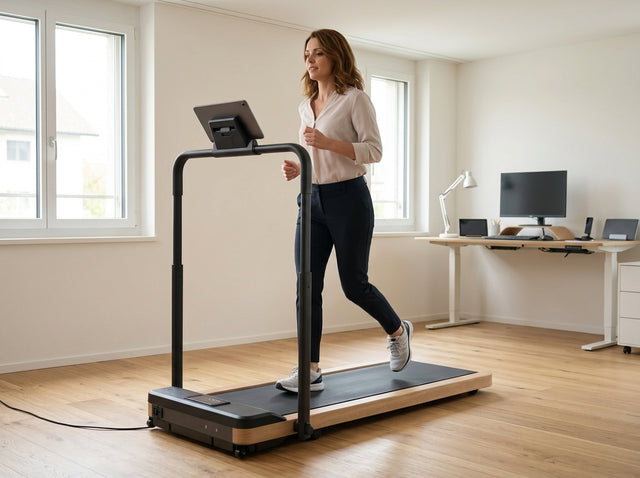
Brisk walking to light jogging (with handrail)
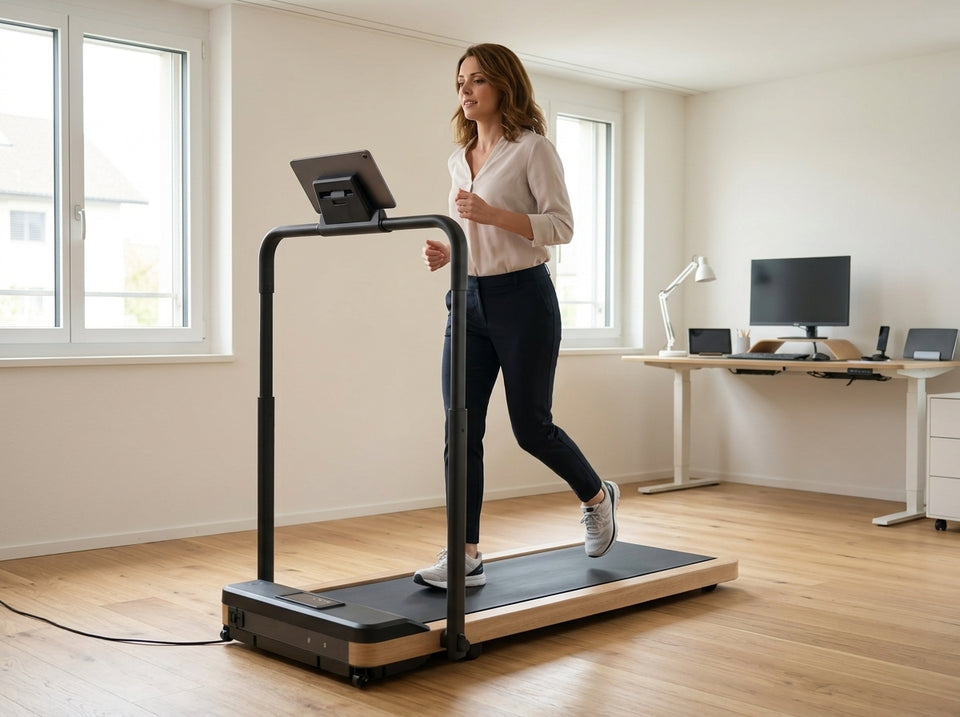
Brisk walking to light jogging (with handrail)
- Safety first: only on the 12 km/h version and only with the handrail up; with the handrail folded down, 6 km/h is the limit. Wear trainers and keep the area behind the pad clear.
- Warm up 5 min at 4-5 km/h, then 5 min brisk at 6 km/h; the handrail stays within reach as a safety net, don't hold on to it.
- Intervals: 1 min easy jog at 7-8 km/h, then 2 min walking at 5 km/h; 6-8 repeats, with smooth transitions in 0.1 km/h steps.
- Use the talk test as your brake: if you can no longer get a short sentence out, drop the speed by 0.5 km/h.
- Cool down 3-5 min at 4 km/h and only step off once the belt has stopped.
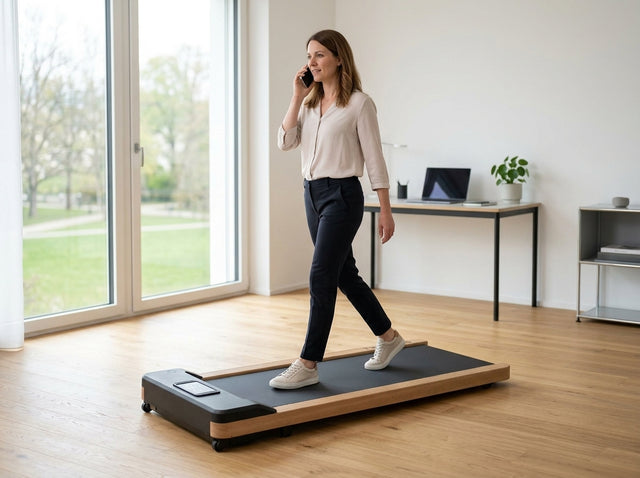
Daily step-collector plan
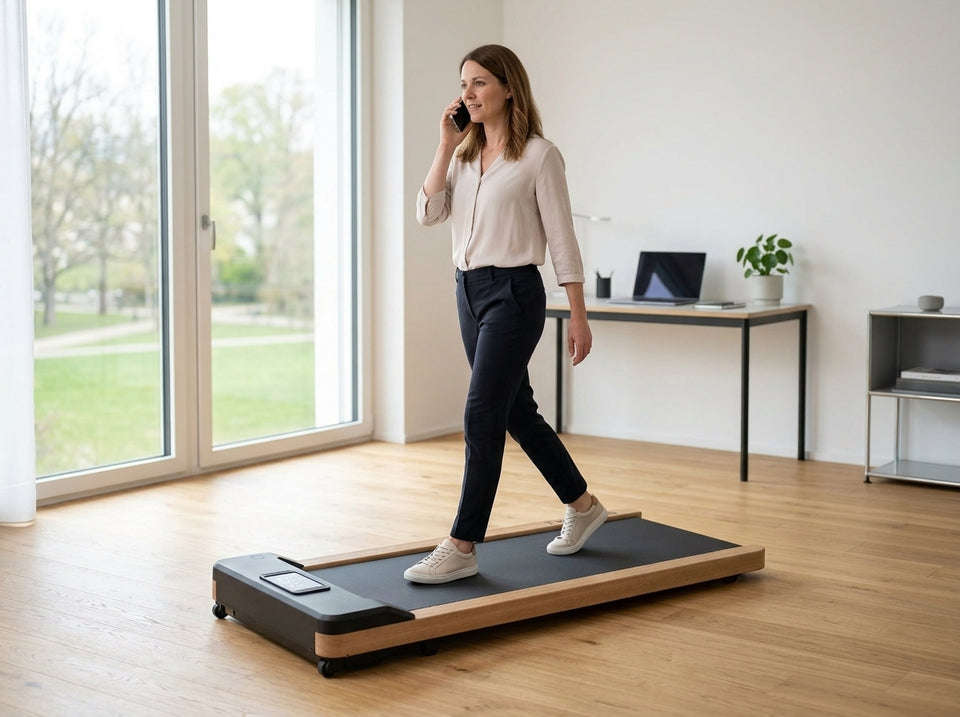
Daily step-collector plan
- Split the day into 3-5 mini sessions of 10-15 min: morning, midday, an afternoon break, and evening with a podcast or TV.
- Speed depends on the situation, 3-5 km/h; always tall, eyes forward, arms loose.
- Rule of thumb: 10-15 min of brisk walking adds up to roughly 1000-1500 steps; four sessions plus everyday walking get most people to around 7000 steps a day.
- For context: large analyses show clear health benefits from around 7000 steps a day; 10000 is not a magic threshold.
- Phone calls are ideal walking time: track your steps on the LCD or in Kinomap.
Ready-to-follow workouts
Start with a curated routine—2 to 3 sessions per week are enough to make noticeable progress.
Gentle start, week 1
The start across 3-4 days of the first week, with a rest day in between. Speed stays under 4 km/h, the goal is getting used to it and building the routine.
- Gentle start for walking beginners · 10-15 min, 2-3x per week
- Daily step-collector plan · 3-5x daily, 10-15 min
Desk day in motion
2-3 walking blocks of 30-45 min during work, plus a brisk 20-min walk after hours. On full sitting days: 5 min on the pad every 30 min.
- Walking desk workday · 2-3 blocks of 30-45 min spread over the day
- Brisk everyday walk · 20-30 min, 3-5x per week
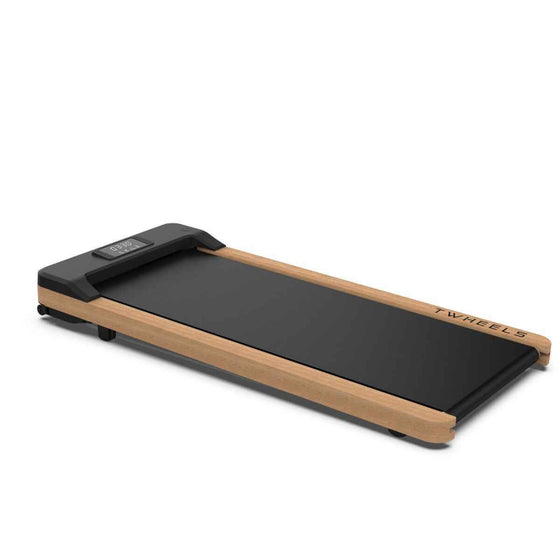
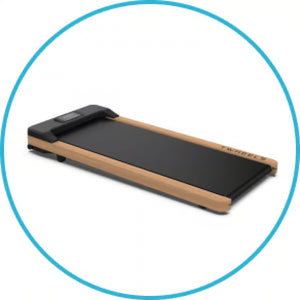
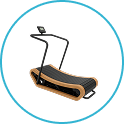
Walking Pad Treadmill made of Oak Wood – TWHEELS
Your workout, coming soon to the TWHEELS app
Workouts, training plans, and personalized training from your TWHEELS equipment, all brought together in one app. Sign up to be among the first to hear about the launch.
No spam. Just the launch information and what the app can do.
Frequently asked questions
How fast can I walk on the WalkingPad?
Can I stay focused while working?
How loud is the WalkingPad?
Do I need special shoes?

Thoughtful. Beautiful. Sustainable.
TWHEELS, keep moving forward.
Contact us anytime:
Phone: +41 43 508 20 26
Email: info@twheels.ch
Warehouse: U. Schwärzistrasse 54, Weesen
