


Wood or plastic sounds like a matter of taste but is primarily a question of material and sustainability. Anyone who wants to use a fitness device for ten years should know what’s beneath the surface: which wood, how certified, how repairable. This guide focuses on the material, from oak to ecological footprint.
At a glance
- Solid wood (oak, maple, walnut) lasts decades with good care, cheap injection-molded plastic becomes brittle and ends up in the trash.
- At TWHEELS, FSC-certified Canadian oak is used, the Pilates reformer uses maple wood, and the water tank is made of shatterproof polycarbonate.
- Wood has a better ecological footprint than full plastic: renewable raw material, bound CO2, less hazardous waste at end of life.
- Care is simple: wipe dry, oil occasionally, add chlorine tablets to the water in the water rowing machine.
- This is about material and durability. The design and living room angle is covered by our main guide to wooden fitness equipment for the living room.
Contents
- Solid wood or plastic, which lasts longer?
- Oak, maple, walnut: which wood for which device?
- How sustainable is wood really?
- How long does a wooden fitness device last?
- How do I care for and repair wooden equipment?
- Frequently Asked Questions
- Conclusion
Solid wood or plastic, which lasts longer?
Solid wood clearly wins when it comes to lifespan. A full plastic injection-molded frame is cheap at purchase but becomes brittle under load and over the years. Once a plastic part cracks, usually the whole device is lost because nothing can be replaced individually. A solid wood frame behaves differently: it absorbs stress without fatiguing, and a scratch or dent is not a total loss but can be sanded and oiled again.
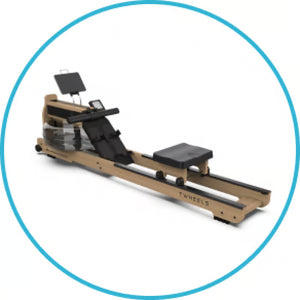
That doesn’t mean plastic is inherently bad. In the right place, it’s even the better choice. For example, the water tank of the water rowing machine is made from shatterproof, UV-resistant polycarbonate, the same material used in hard-shell suitcases or motorcycle helmet visors. Wood would swell with constant water contact, polycarbonate does not. The art lies in the material mix: load-bearing structure made of wood, functional parts made of plastic where it really makes sense.
| Property | Solid wood | Full plastic (injection molding) |
|---|---|---|
| Lifespan | decades with care | often 2 to 5 years, then brittle |
| Repairability | sanding, oiling, replacing parts | usually total loss in case of crack |
| Appearance over time | Develops patina, ages beautifully | Yellows, scratches visible |
| Raw material | Renewable, binds CO2 | Petroleum-based |
| End of life | Biodegradable or burnable | Hazardous waste, hard to recycle |
Oak, maple, walnut: which wood for which device?
Not every wood fits every device, and that's no coincidence but material science. Hardness and fiber structure are decisive. Oak is hard, heavy, and very pressure-resistant, ideal for supporting frames that must withstand weight and movement. Maple is lighter, fine-grained, and more elastic, making it interesting for equipment with sliding parts. Walnut is the dark, noble variant, hard and dimensionally stable but more expensive.
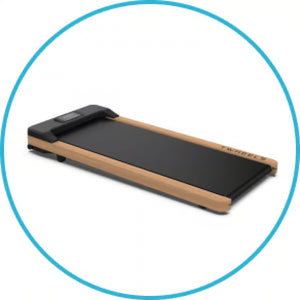
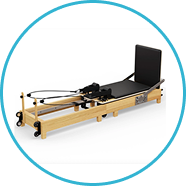
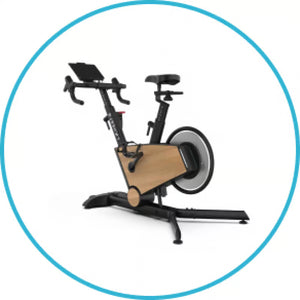
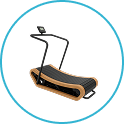
At TWHEELS, the distribution looks like this: The Walking Pad made of Canadian oak wood, the water rowing machine made of oak wood, and the indoor bike made of oak wood all use oak because a stable, load-bearing frame is essential here. For example, the water rowing machine supports up to 180 kg and users up to 200 cm tall, which only a truly pressure-resistant wood can handle. The Pilates Reformer, on the other hand, is made of maple wood, which better suits the sliding mechanics of the reformer.
- Oak: hard, pressure-resistant, durable. For supporting frames (Walking Pad, rowing machine, bike).
- Maple: light, fine-grained, elastic. For equipment with sliding parts (Pilates Reformer).
- Walnut: dark, noble, dimensionally stable. Premium look, higher price.
If you want to compare the entire selection, you can find it in the Fitness Equipment from TWHEELS category.
How sustainable is wood really?
Wood is only ecologically meaningful if it comes from responsible forestry; otherwise, it's just marketing. That's exactly what the FSC label (Forest Stewardship Council, an independent organization that audits sustainable forestry) is for. It certifies that for every tree cut down, a new one is planted and the forest as an ecosystem is preserved. Our wooden equipment carries this label, and the oak wood comes from Canadian forests.
The environmental balance behind it is simple. Think of plastic and wood like two fuel tanks: plastic is made from oil, a resource that is used up once and gone. Wood grows back and even binds CO2 while the tree grows, which remains stored in the finished device. At the end of its life, wood is biodegradable or can be cleanly burned, while solid plastic ends up as hard-to-recycle hazardous waste. To be honest: a wooden device doesn’t disappear without a trace; it contains varnish, metal, and electronics. But the basic material is clearly the cleaner option.
How long does a wooden fitness device last?
With good care, a solid wood device lasts for decades, which is the real sustainability advantage. The most sustainable device is the one you don’t have to replace every three years. A frame that doesn’t wear out, plus parts that can be replaced individually, beats any disposable device, no matter how green its packaging claims to be.
Specifically: The wooden frame is the part that will outlast you. The parts that need more attention are the moving and electronic components, like the display, Bluetooth module, seat cushion, or the water in the rowing machine. The key difference from plastic equipment: if a wear part breaks, you replace the part, not the whole device. Exact warranty and return periods can be found in our shop terms.
How do I care for and repair wooden equipment?
Care is simple; a dry or slightly damp cloth is enough for everyday use. The important thing is what you don’t do: no harsh cleaners, no soaking wet wiping, no constant direct sunlight on the wood. Once or twice a year, a little wood oil or care wax keeps the surface protected and maintains its shine.
- Everyday use: Wipe off dust and sweat with a dry or slightly damp cloth.
- 1 to 2 times per year: Apply a thin layer of wood oil or care wax to nourish the wood and protect it from drying out.
- Scratches: Lightly sand, re-oil, done. Unlike plastic, a scratch is not a defect.
- Water rowing machine: Water stays in the tank; chlorine tablets keep it clear and algae-free, available in the shop.
- Location: Do not place in direct sunlight or directly on a heater to avoid cracks.
Frequently Asked Questions
Is wood or plastic more sustainable for fitness equipment?
Solid wood from certified forestry is more sustainable. It is renewable, binds CO2, and is easier to dispose of cleanly at the end of its life than petroleum-based plastic. Certification is crucial; without FSC certification, wood is no guarantee of sustainability.
Which wood is best for fitness equipment?
For load-bearing frames, oak because it is hard and pressure-resistant. For devices with sliding parts like the Pilates reformer, maple because it has finer fibers and is more elastic. Walnut is the noble, more expensive premium option.
Does sweat damage the wood?
No, as long as you wipe off sweat promptly and oil the wood once or twice a year. The oiled or lacquered surface protects against moisture. Only prolonged standing wetness should be avoided.
How long does such a device last?
The wooden frame lasts for decades with good care. Wear parts like the display, padding, or electronics may need to be replaced sooner but can be swapped individually instead of discarding the entire device.
Can wood handle the stress of training?
Yes. The water rowing machine made of oak wood, for example, can support up to 180 kg, while the walking pad supports up to 135 kg. Hardwood like oak is more pressure-resistant than many plastic frames.
Is the water tank on the rowing machine also made of wood?
No, the tank is made of shatterproof, UV-resistant polycarbonate. Wood would swell with constant contact with water, so plastic is deliberately the better choice here. The frame all around is made of oak wood.
Conclusion
Wood beats plastic where it counts: durability, repairability, and environmental impact. A solid wood frame made from FSC-certified oak lasts for decades, can be maintained and refinished instead of thrown away, and as a renewable resource, it’s cleaner than a fully plastic device. What matters is an honest look at the details: plastic in the right place, like the polycarbonate water tank, is not a contradiction but a good material choice. If you’re interested not only in the material but also in how such a device fits into your living room and remains visible, read our main guide to wooden fitness equipment for the living room. You can find the full selection in the TWHEELS fitness equipment category.